Home / Destinations / RELIGIOUS / Buddhism /
Jethawanaramaya
Last updated on 15 Jun 2023Show location
The Jethawanaramaya Stupa, located in the ancient city of Anuradhapura in Sri Lanka, is an awe-inspiring Buddhist monument that stands as a testament to the country's rich historical and religious heritage. With its grand scale and profound significance, the stupa is an emblem of Sri Lanka's deep-rooted Buddhist culture. Dating back to the 3rd century BCE, the Jethawanaramaya Stupa holds immense historical, architectural, and spiritual value, captivating visitors with its majestic presence and remarkable construction. The Jethawanaramaya Stupa was built by King Mahasena during his reign and was named after his chief minister, Jethavana. This grand structure played a pivotal role in the religious landscape of ancient Sri Lanka and served as a focal point for Buddhist activities and worship. It was constructed to enshrine sacred relics and served as a venerated pilgrimage site for Buddhists.
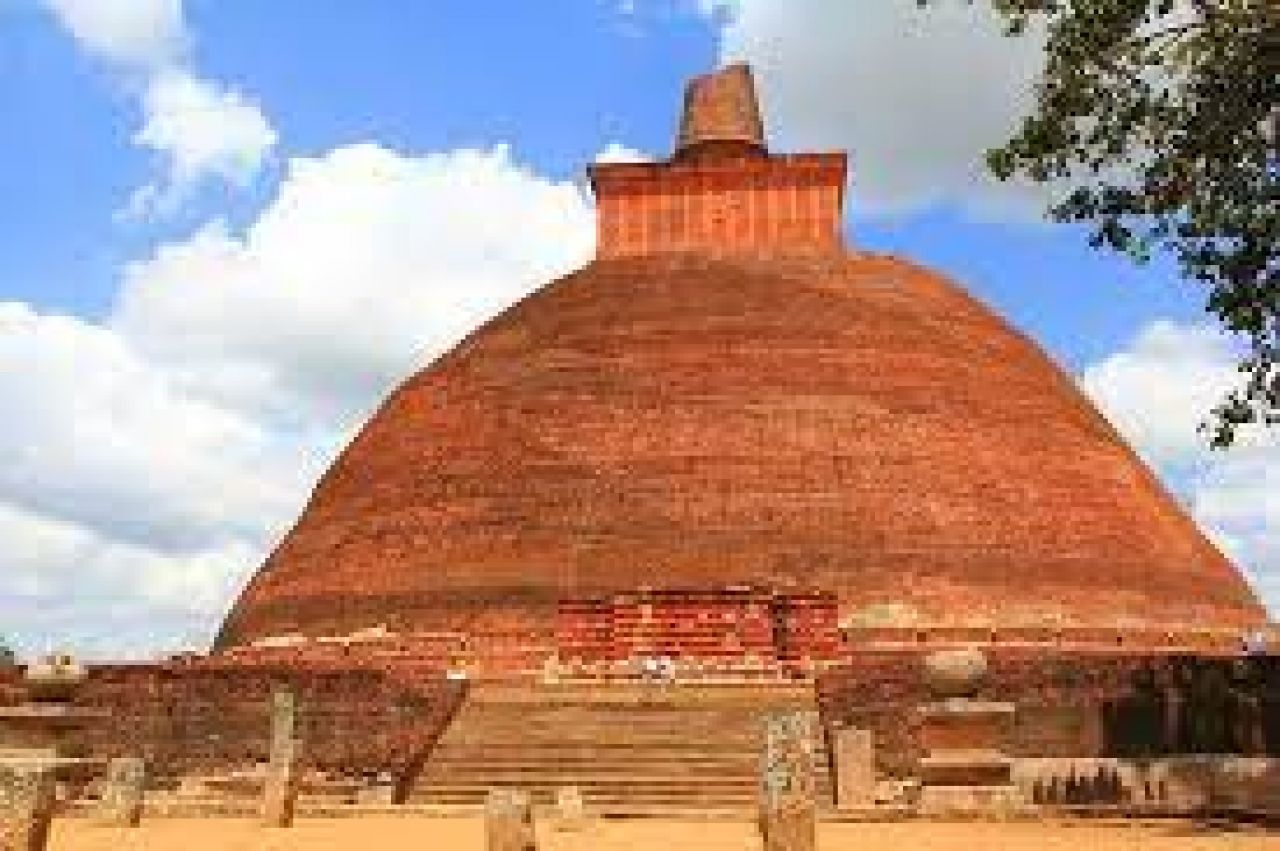
The architectural splendor of the Jethawanaramaya Stupa is a testament to the advanced engineering and construction techniques of ancient Sri Lanka. Standing at a height of approximately 120 meters, it was once the third tallest structure in the world, only surpassed by the Great Pyramids of Giza. The stupa's colossal dome rises above the surrounding landscape, evoking a sense of reverence and wonder. The Jethawanaramaya Stupa boasts a unique architectural design characterized by a solid brick structure covered in plaster. The stupa's base measures an astounding 183 meters in diameter, making it one of the largest Buddhist stupas ever built. The sheer magnitude of the structure is a testament to the engineering prowess and dedication of the ancient builders. The stupa is adorned with intricate details and decorative elements that enhance its grandeur. Elaborate stone carvings depict scenes from Buddhist mythology, including stories of the Buddha's life and previous lives. These carvings not only add aesthetic beauty to the stupa but also serve as a visual representation of Buddhist teachings and beliefs.
The Jethawanaramaya Stupa's significance lies not only in its architectural magnificence but also in its association with sacred relics. It is believed to enshrine relics of the Buddha, such as bone fragments or personal artifacts. The presence of these relics adds a profound spiritual aura to the stupa, attracting devotees who make pilgrimages to pay their respects, offer prayers, and seek blessings. The stupa is surrounded by a vast monastic complex that includes meditation platforms, monastic dwellings, and other structures related to Buddhist practice. The complex served as a thriving center of religious and intellectual activities, attracting scholars, monks, and pilgrims from far and wide. It fostered spiritual growth, intellectual discourse, and the dissemination of Buddhist teachings. Over the centuries, the Jethawanaramaya Stupa has faced periods of decline and restoration. Today, it stands as a UNESCO World Heritage Site and is meticulously maintained by the Sri Lankan Department of Archaeology. Restoration efforts have been undertaken to preserve its historical and cultural significance, ensuring that future generations can appreciate its grandeur and learn from its historical and spiritual legacy. Visiting the Jethawanaramaya Stupa is a profound experience that allows one to connect with the rich history and spirituality of Sri Lanka. The stupa's monumental size, intricate craftsmanship, and sacred aura make it a must-visit destination for those seeking to delve into the country's ancient past and immerse themselves in the teachings of Buddhism.