Home / Destinations / HISTORICAL / Ruins /
Sadhakadapahana
Last updated on 26 Jun 2023Show location
Sadhakadapahana, also known as the Moonstone, is a remarkable architectural feature found at the entrances of ancient Buddhist temples and monastic complexes in Sri Lanka. This intricately carved semicircular stone slab holds great historical, cultural, and religious significance. The Sadhakadapahana serves as both an aesthetic adornment and a symbolic representation of Buddhist teachings, making it a unique and captivating element of Sri Lanka's architectural heritage.
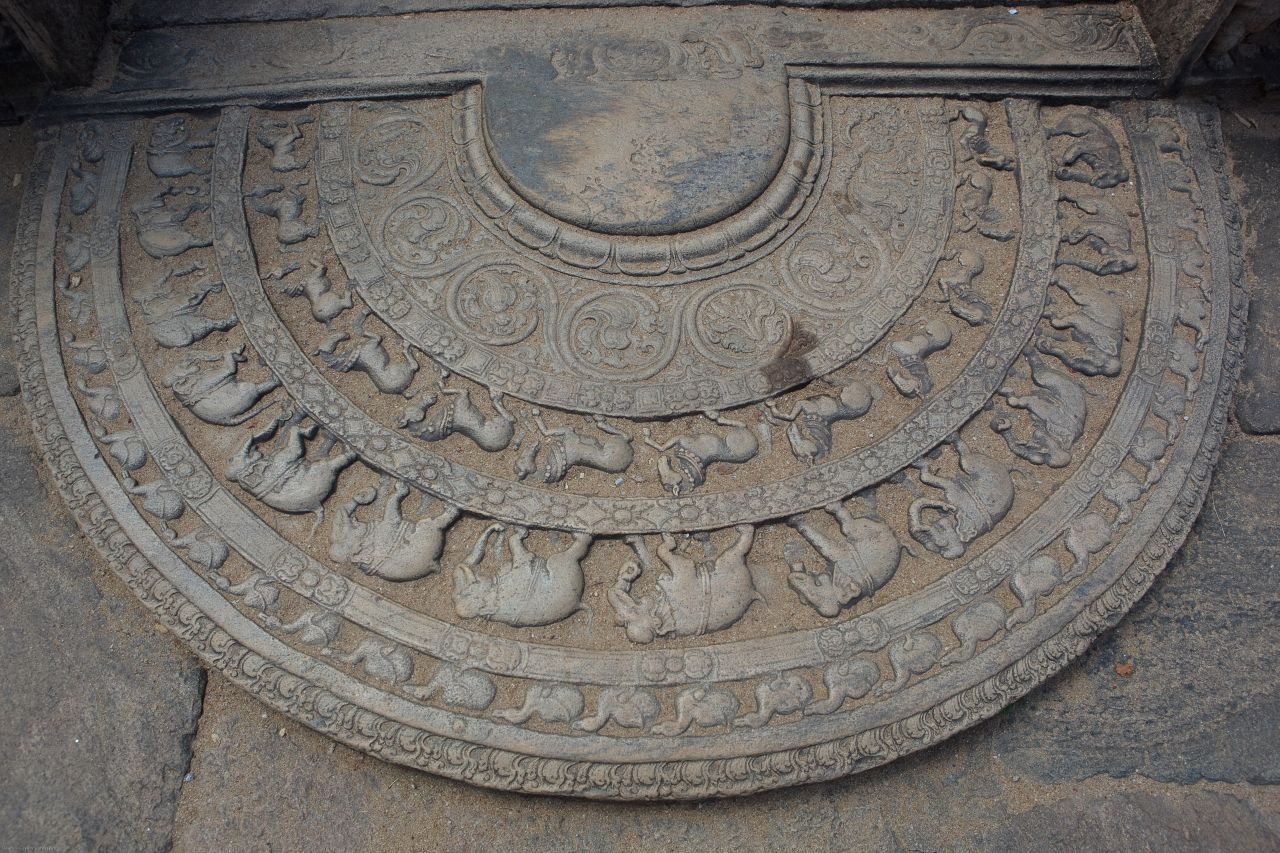
The Sadhakadapahana is typically located at the bottom of a flight of steps leading to the main entrance of a Buddhist temple or monastery. It is positioned in such a way that visitors must pass over it, symbolically leaving the worldly realm behind and entering the sacred space. The term "Sadhakadapahana" translates to "moonstone," referring to its crescent moon shape. Carved out of stone, the Sadhakadapahana is adorned with intricate patterns and motifs that hold deep symbolic meaning. The central design element is usually a lotus flower, which is highly revered in Buddhist symbolism, representing purity and enlightenment. Surrounding the lotus are several concentric bands filled with intricate carvings of animals, mythical creatures, and floral patterns.
The carvings on the Sadhakadapahana hold significant symbolism in Buddhist teachings. The outermost band often depicts a series of geese or swans, symbolizing the transience of life and the importance of spiritual liberation. Moving inward, the following bands may feature depictions of elephants, horses, lions, and bulls, representing different stages of existence and the challenges one must overcome on the path to enlightenment. The innermost band, closest to the central lotus, is typically adorned with intricate foliage and decorative motifs. These patterns symbolize the abundant growth of wisdom and compassion that can be achieved through the practice of Buddhism. The overall composition of the Sadhakadapahana presents a visual narrative of the Buddhist path, guiding visitors towards the central lotus of enlightenment. The Sadhakadapahana holds not only symbolic value but also serves as a testament to the artistic skill and craftsmanship of ancient Sri Lankan artisans. The intricate detailing and precision of the carvings showcase the mastery of stone carving techniques prevalent during the time when these moonstones were created. Visiting a Buddhist temple or monastery that features a Sadhakadapahana offers a unique opportunity to witness and appreciate this exquisite architectural element. The moonstone serves as a reminder of the profound teachings of Buddhism, encouraging contemplation and introspection as visitors enter the sacred space. It sets the tone for the spiritual experience that awaits within the temple or monastery. The Sadhakadapahana has become an iconic symbol of Sri Lankan architecture and cultural heritage. Many ancient temple complexes in Sri Lanka, such as Anuradhapura, Polonnaruwa, and Kandy, boast magnificent examples of moonstones. They are not only objects of historical and cultural significance but also sources of inspiration for contemporary Sri Lankan artists and architects. In conclusion, the Sadhakadapahana, or Moonstone, is a remarkable architectural feature that holds great significance in Sri Lanka's Buddhist heritage. Its intricate carvings and symbolic motifs convey the essence of Buddhist teachings and guide visitors on the path to enlightenment. As a visually stunning and spiritually profound element, the Sadhakadapahana continues to captivate and inspire all who encounter it, preserving the rich cultural and religious heritage of Sri Lanka.