Home / Destinations / NATURE / Forests and Bo... /
Ridiyagama Safari Park
Last updated on 21 May 2024Show location
Ridiyagama Safari Park is a vast safari park and zoo located in the Ridiyagama area of Hambantota District in Sri Lanka. The park, spanning 500 acres, opened on May 28, 2016. However, only around 200 acres of the reservation are being developed, with gradual expansion plans. The park is divided into nine separate wildlife zones, although only four are currently operational.
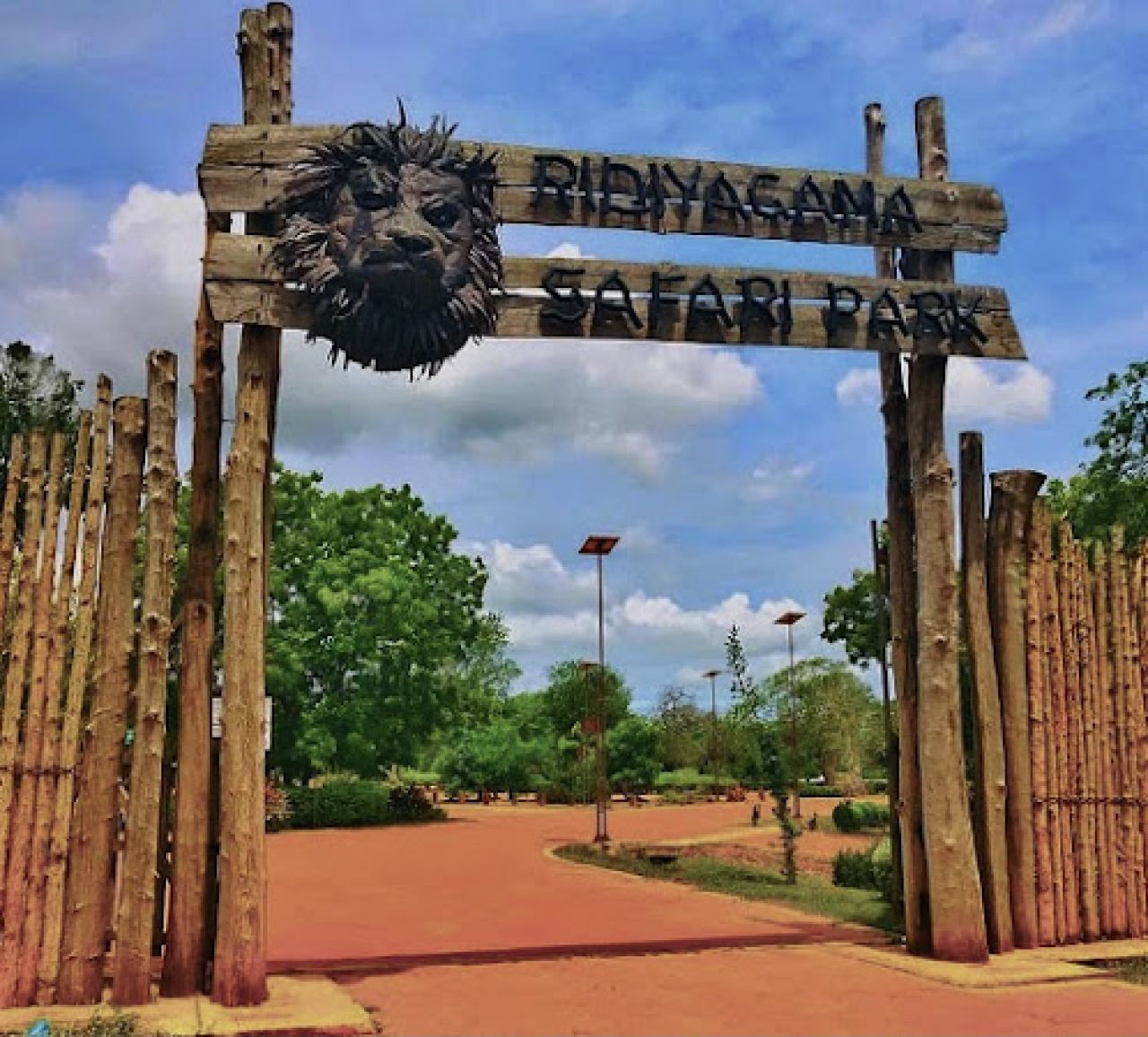
The primary aim of developing Ridiyagama Safari Park was to provide the animals with as much freedom of movement as possible while keeping the visitors in cages. The mammal zone, which covers an area of 80 acres, comprises a large variety of grazers and some flightless birds from America, Africa, and Asian countries. This zone houses some rare-to-see mammals, such as Cape Buffalos, Zebras, camels, antelopes, guanacos, and Ostriches. The elephant zone covers an area of fifty-four acres. It is home to several small elephant groups and an impressive African Elephant with magnificent tusks. This African elephant was relocated to this park from the Dehiwala Zoological Gardens.
Moving on to the Bengal Tiger Zone, which spans five acres, six Balali Tigers are present. These tigers are quite used to the presence of humans and approach vehicles without any fear. The next zone is the Lion Zone, which houses fourteen lions. Seven lions were brought from various countries when the park was first established, while the remaining seven were born there. Additionally, a male lion born in the park was donated to the Ambepussa Sinha Regiment of the Sri Lanka Army to serve as their mascot. One of the major drawbacks of this site is that visitors are not permitted to enter the safari grounds with their personal vehicles. As a result, visitors are left with two options: either they can use the limited number of buses with meshed windows or hire one of the few jeeps available. Unfortunately, the weekends and holidays tend to attract large crowds of visitors, so one may spend a significant amount of time waiting for transportation under the hot sun.