Home / Destinations / CLASSICAL / Architecture /
Galle Fort
Last updated on 27 Apr 2023Show location
A nation's pride and its stature in the eyes of the world are boosted by its civilization, culture, and natural wonders. With these characteristics and a history dating back more than 2,500 years, reinforced by priceless ancient artifacts, Sri Lanka is considered to be one of the world's biodiversity hotspots.
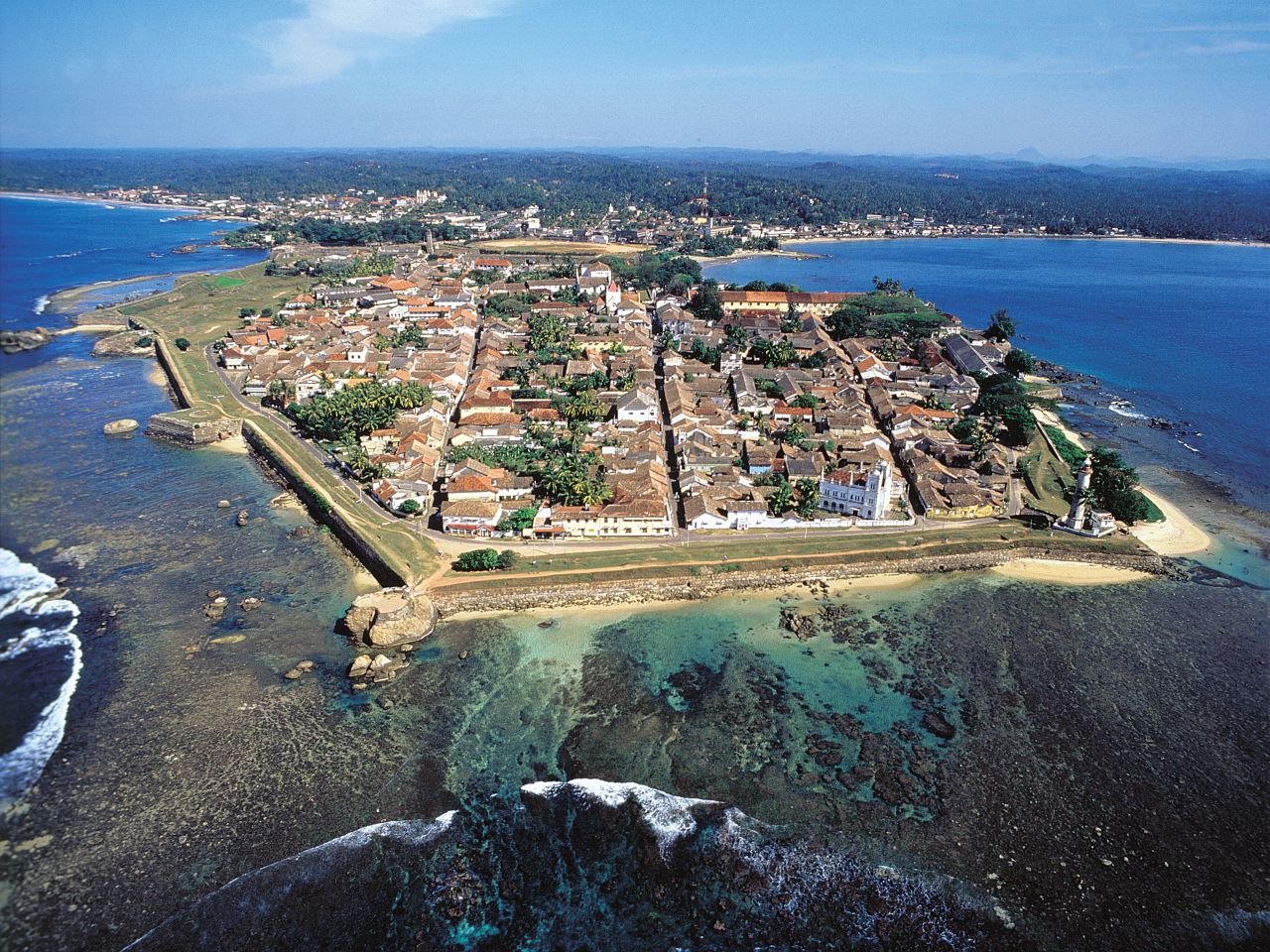
There is no disputing the Galle Fort's historical significance. Although the history of Galle is lost to time, artifacts from the pre-Christian and Roman ages provide evidence of its existence. The Galle Fort became Ceylon's principal southern international port during the Middle Ages, luring traders from China, India, Indonesia, the Persian Empire, Rome, and the Arab world. A nation's pride and its stature in the eyes of the world are boosted by its civilization, culture, and natural wonders. With these characteristics and a history dating back more than 2,500 years, reinforced by priceless ancient artifacts, Sri Lanka is considered to be one of the world's biodiversity hotspots.
With the boundless ocean on one side, the Galle Dutch Fort is a priceless historical gem guarded by dark, thick stone walls. Like the squares on a chess board that cross in predictable spots, the routes inside the Galle Fort have scarcely changed over time. Visitors are welcomed to a wonderful stroll through the 17th century along straight, narrow alleyways that branch out in all directions. Today's Peddler Street was called "Moorse Kramerstraat" by the Dutch, Lighthouse Street was "Zeeburgstraat and Middelpuntstraat", Hospital Street as 'Nieuwe Lijnbaanstraat and Lijnbaanstraat (New Ropewalk Street), Old Ropewalk Street as Oude Lijnbaanstraat (Old Rope-Walk Street), Church Street as Kerkstraat, Parrawa Street as "Parruasstraat" and Chiando Street as "Chiandostraat". By doing this reminiscence walk, one would miss the well-known merchants from the 17th century who sold "bondi aluwa," a popular sweetmeat from the Deep South, along with lace, elephant, tortoise, and turtle shell jewelry. The first stronghold in Galle was constructed in 1505 by a party of Portuguese sailors under the command of Don Lorenzo de Almeida on a cliff that protruded into the ocean. In 1520, it was known as the Swart Bastion or the Black Fort. The Dutch later reinforced and expanded it in 1667.